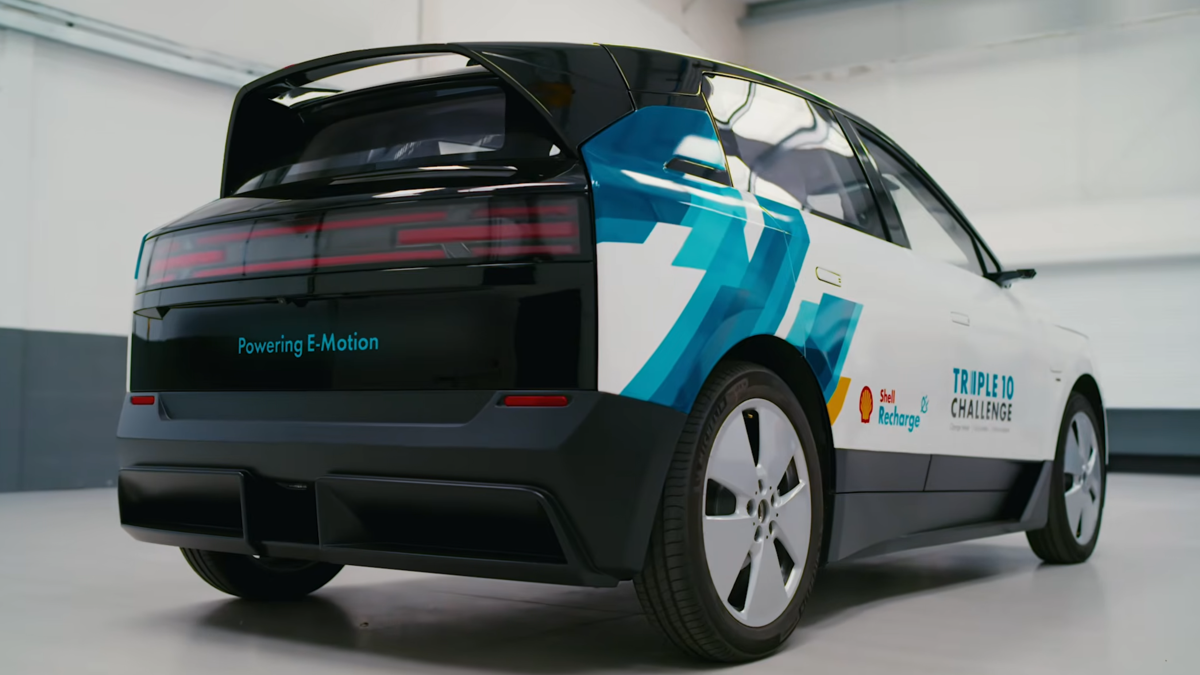
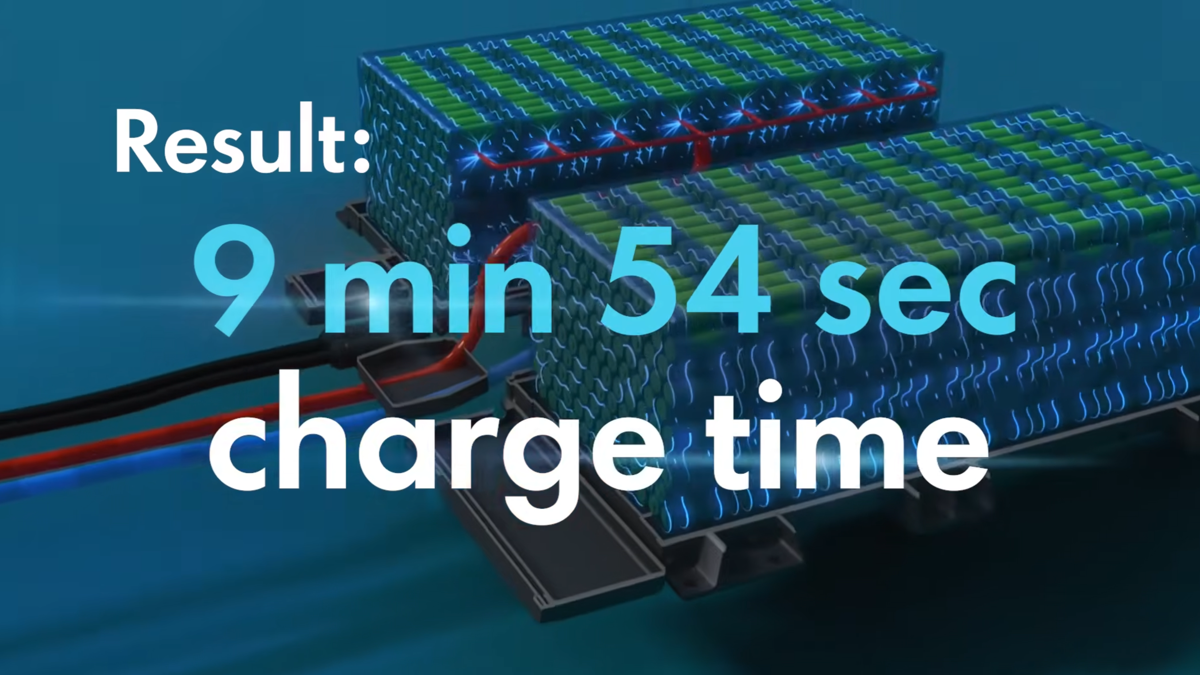
Shell unveiled a compact electric vehicle that achieves 10 km/kWh (6.2 miles/kWh), charges from 10 to 80 percent in under 10 minutes on a regular 175-kW charger, and has a projected lifecycle carbon footprint of just 10 tonnes of CO₂, or roughly half today's average EV. The big news is how it achieves those figures. The concept’s secret is Shell Recharge, a dielectric thermal fluid that immerses battery cells and powertrain components directly in a non-conductive liquid, keeping everything at its optimal temperature without the complexity of conventional coolant systems.
Shell
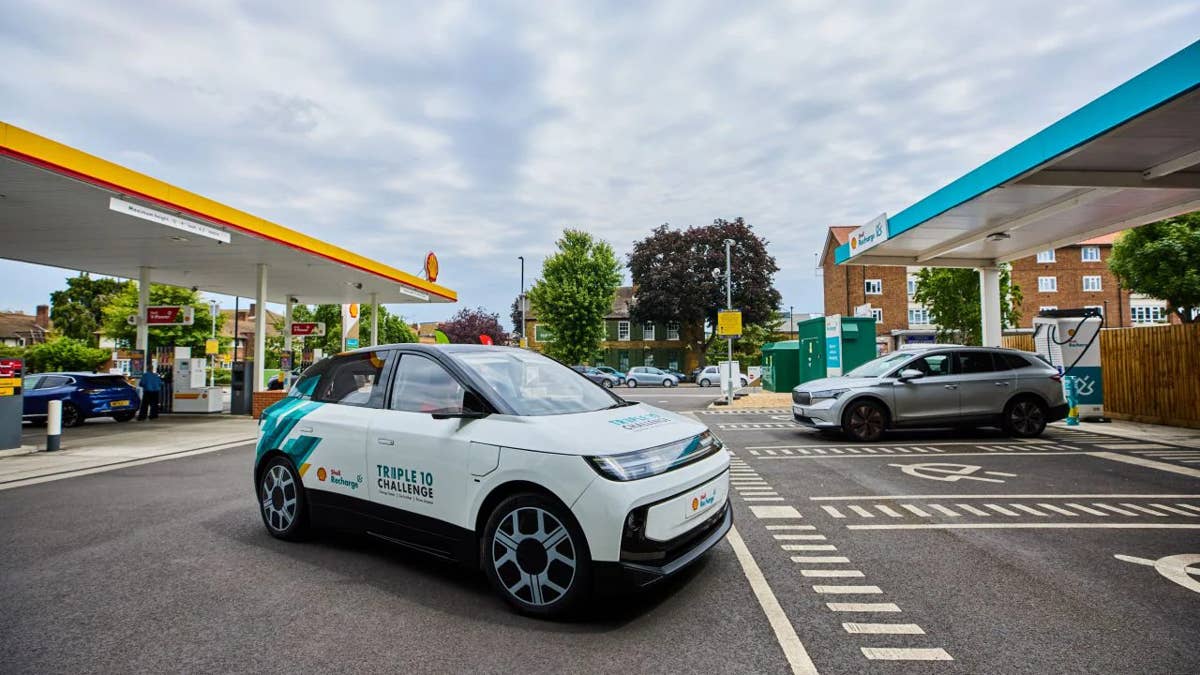
Called the Triple 10 Challenge, the concept was built around three ambitious "10" targets, all of which Shell says it achieved. There's a certain irony in an oil company building one of the most efficient electric cars in the world, but here we are.
A Battery That Keeps Its Cool
The EV industry’s solution to range anxiety has always been a bigger battery. Fair enough, but they also add weight, cost, and manufacturing emissions. Shell's Triple 10 challenges that very notion. While not officially disclosed, based on its claimed efficiency and charging rate figures, the battery appears to be roughly 34-38 kWh, or a little over half the size of what many mainstream EVs carry today. Yet the concept could deliver over 200-220 miles of real-world range.
Shell
The cooling system is one of the biggest contributors to its impressive efficiency. It keeps the battery, motor, and power electronics at their ideal temperature simultaneously, wringing over 30 percent more efficiency out of the same energy. The Tesla Model 3, one of the more efficient EVs, sits at around 8 km/kWh, compared to Shell's 10 km/kWh figure.
Shell's Real Product Isn't the Car
The Triple 10 is actually a rolling demonstration of Shell Recharge, the real product here. Recharge is a dielectric, hydrocarbon-based thermal fluid that fully immerses the battery cells and powertrain components directly, replacing the conventional water-glycol systems that pipe coolant around cells rather than through them. It absorbs heat more uniformly, eliminates hotspots, and dramatically simplifies the vehicle's internal architecture. Shell says the simplified design can reduce battery pack costs by roughly 25 percent compared to a conventional EV setup.
Shell
The concept was developed alongside engineering partners and validated, which lends it considerably more credibility. Importantly, Shell isn't trying to become a carmaker. It's trying to convince the industry that better thermal management can unlock lighter, cheaper, and more efficient EVs. Coming from one of the world's biggest oil companies, that's a surprising pitch, but perhaps an increasingly logical one, especially when Shell makes the secret sauce to unlocking that efficiency.
from Autoblog News https://ift.tt/vR36B1q



0 Comments