Up to two feet of snow and temperatures plunging 25 degrees below the mid-April average are slamming 11 western and northern states today, Friday April 17, 2026, as a late-season "cold storm" presses from the Cascades and Northern Rockies into Colorado and the Northern Plains. The Weather Prediction Center is headlining late-season snow for the Northern Rockies, Central Rockies, and Northern Plains, with mountain passes from Washington and Oregon east through Idaho, Montana, Utah, Wyoming, and Colorado all in the impact zone through Friday night, plus snow and ice probabilities extending into North Dakota and northwest Minnesota.
Peak danger window: Friday afternoon through Saturday morning across I-70, I-80, and I-25 in Colorado and Wyoming, where 70-degree highs Thursday will collapse into the 30s Friday and refreeze wet pavement after sunset.
What to Expect
- Snow totals: 1-2 feet across the Cascades and Northern Rockies; 8-16 inches cumulative across Utah and Colorado mountains; 4-8 inches in Yellowstone National Park
- Lower elevations: Light accumulations expected in Boise, Pocatello, Great Falls, Salt Lake City, Laramie, Cheyenne, and Aspen
- Temperature crash: 40-degree drops in under 24 hours across eastern Wyoming and Colorado
- Worst corridors: I-90 across Montana, I-84 through eastern Oregon and Idaho, I-80 across Wyoming, I-15 through Utah and Idaho, I-70 over the Colorado Rockies
The storm's heavy snow focus is shifting south and east through Friday, with Colorado terrain taking the brunt as the Utah and Wyoming snow tapers off. Snow squalls and convective bands hammered Utah and Wyoming overnight, and the WPC is flagging Day 1 snow probabilities of 10-20% for greater than 4 inches over central North Dakota, with ice probabilities of 10-30% for greater than 0.1 inches stretching from northeast North Dakota through northwest Minnesota. Per OpenSnow's multi-day breakdown, southwest Montana, northwest Wyoming, and northern Utah saw the heaviest accumulation Thursday, with Colorado now in the firing line through end of day Friday.
Road Conditions
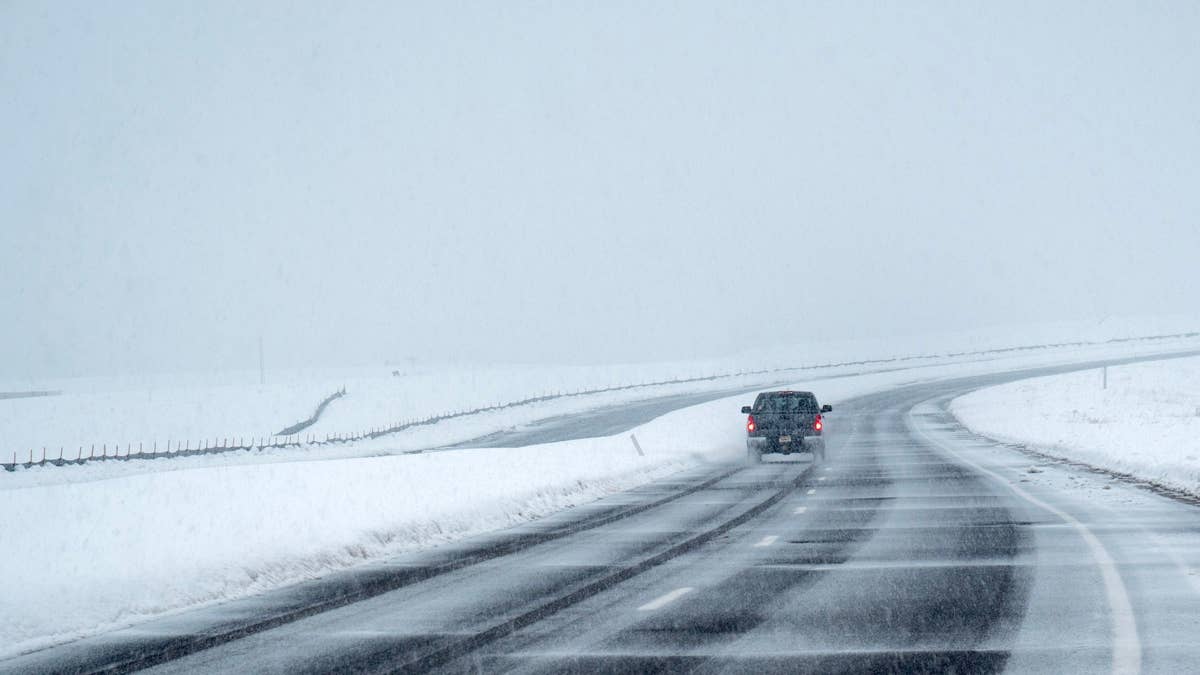
Mountain passes in Idaho, Montana, Wyoming, Utah, and Colorado will see accumulating snow throughout the day, with rapid changes in surface conditions on bridges, overpasses, and shaded stretches. Even AWD and 4WD vehicles need winter-rated tires to stop on ice, which is the threat that builds across the impact zone after dark. Autoblog's AWD vs. 4WD breakdown covers what each system actually does and doesn't do in this kind of weather. Drivers should allow extra travel time, keep emergency supplies in their vehicles, and avoid travel altogether during peak accumulation windows if possible.
US NWS
Temperature Whiplash on the Front Range
Cheyenne, Laramie, Denver, Colorado Springs, and Aspen are the textbook examples of why this event is dangerous well beyond the snowfall totals. A 40-degree temperature swing in 24 hours over wet pavement is the recipe for late-evening black ice on roads that looked perfectly drivable at lunch. If you're traveling I-25 between Cheyenne and Pueblo Friday afternoon or evening, or heading west on I-70 toward Vail and Glenwood Springs, plan to either be off the road by sunset or to slow your stopping calculations dramatically as temperatures cross freezing.
Winter Driving Tips
If you are driving into the impact zone today, your tires are the single most important variable. AWD will help you accelerate on snow, but it does nothing to shorten stopping distance on ice, which is exactly the threat you'll face on I-80 in Wyoming or any pass along I-70 in Colorado as temperatures crash overnight.
Autoblog's winter car readiness checklist recommends a minimum of 4/32 inches of tread depth for safe winter driving, and cold temperatures will drop tire pressure by roughly 1 to 2 PSI for every 10 degrees, so check your pressures before you leave a warm garage. Give yourself at least triple the stopping distance you would use on dry pavement, and double that again on ice. If today's storm is the reminder that your vehicle isn't set up for winter, Autoblog's full breakdown of the best cars and SUVs for snow and winter driving is worth a read, and our best practices for driving in snow, ice, and rain guide covers everything from skid recovery to what to keep in your trunk for emergencies. The smartest call on a day like today, if your schedule allows, is to wait out the peak refreeze window entirely.
Timing
The system is moving through the western U.S. today, Friday April 17, 2026, with Colorado snowfall winding down by Saturday morning as the storm exits east. The Cascades and Northern Rockies are tapering after their Thursday peak. However, the National Weather Service notes a new storm system arrives by Sunday, bringing additional rain and mountain snow to the West Coast, so this is not the last round. We'll update this article as conditions evolve.
from Autoblog News https://ift.tt/MQSn52R






0 Comments