EV maintenance costs are not the problem for you. They’re a problem for your dealer. New-car margins are thin, so the real money comes from the “fixed ops” side of the house — parts and service — where gross margins often live in the 45–55% range, far higher than new-vehicle sales. When you pay for an oil change, a coolant flush, or a brake job, you’re feeding the profit engine that keeps the doors open.
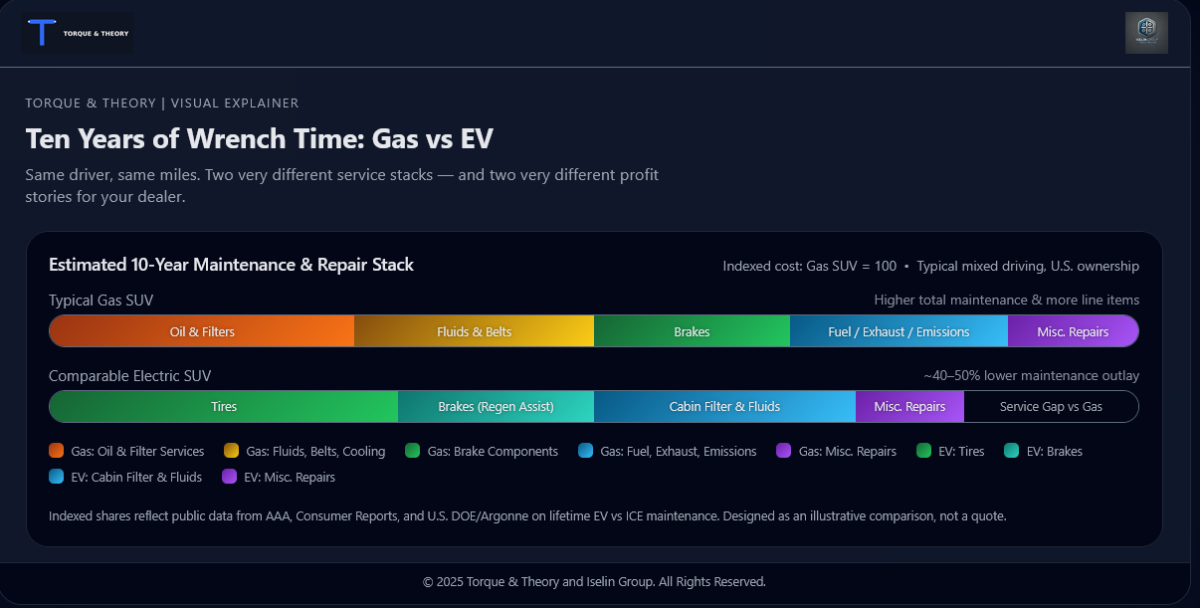
This chart compares a “typical” gas SUV and a similar electric SUV over ten years of ownership. Each bar shows where your maintenance money goes — and how much of that stack simply disappears when you go electric.
Over time, a loyal gas-car owner becomes an annuity. Every 5,000–7,500 miles, back you come. The service department gets labor hours, parts markup, and a fresh chance to “find” something else that needs attention. That repeat business is baked into dealership planning. Take away that stack of gas car maintenance visits and the model starts to wobble.
What EV Owners Actually Spend on Maintenance
Now flip the view to your side of the key fob. Real-world data from a large Consumer Reports analysis shows EV owners spend about half as much on maintenance and repairs over the life of the vehicle as gas-car owners. Fewer moving parts, no oil changes, no exhaust, no spark plugs. That’s not marketing spin; it’s what people actually paid.
AAA’s Your Driving Costs numbers back it up. In 2023, they pegged average maintenance for new EVs at about 8.12 cents per mile, the lowest of any vehicle category they track. The U.S. Department of Energy’s Argonne lab found the same pattern: battery-electric cars run about 40% cheaper per mile to maintain than gas cars.
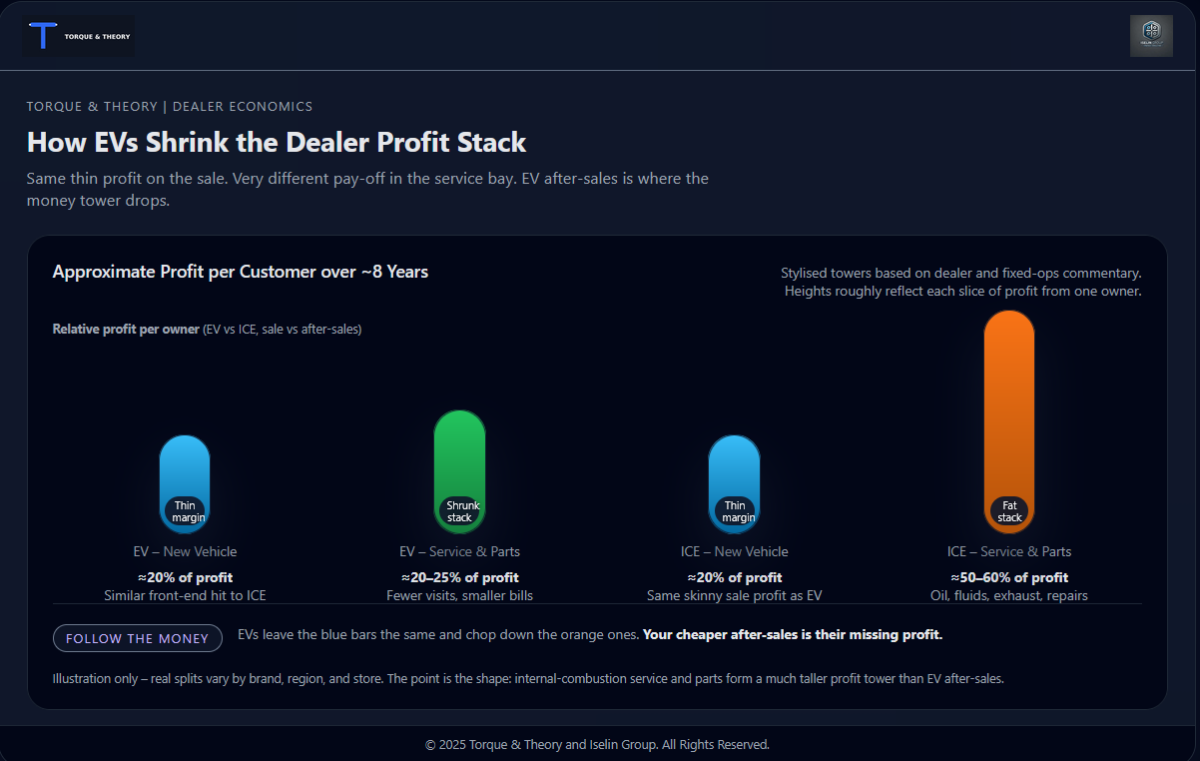
This chart shows how much profit a dealer makes from one owner over about eight years, split into four towers. The two blue bars are the thin profit on the new-car sale (EV and ICE), which is basically the same. The green bar is what the dealer earns from servicing an EV over time, and the tall orange bar is what they earn from servicing an ICE car. The picture makes one point very clear: your EV doesn’t hurt the dealer on the sale — it hurts them because the big orange after-sales tower shrinks.
For you, that means the maintenance list on an EV shrinks to a short, boring lineup: tires, cabin filter, brake fluid checks, general inspections. Regenerative braking stretches pad life. There’s no timing belt hanging over your head at 100,000 miles, no turbocharged sludge drama, no “fuel system service” surprise on the invoice.
Why Your Dealer Isn't Rooting for EVs
Put yourself in the dealer’s chair for a second. A gas crossover with good fuel economy, decent ride comfort, and clean handling brings you back to the store again and again. Each visit adds to dealership profits and helps hit service targets. The EV version of the same model slices that revenue stream down. Same customer, less service, less money.
That incentive shapes the story you hear. Concerns about battery replacement, resale value, and repair costs for EVs get plenty of airtime. The boring math of lower EV maintenance costs gets a softer sell. Industry explainers openly describe service as the financial backbone of the business, with fixed-ops margins far above the front-of-house sales desk.
How to Cut Through the Sales Floor Static
So treat EV advice from a showroom or service lane the way you treat finance offers: assume there’s a house edge. When you’re cross-shopping an EV and a gas car, ask for a written maintenance schedule and estimated costs for five to eight years on both.
If the EV needs fewer trips to the shop, that’s less time wasted, less money burned, and less drama. The fact that it also trims dealership profits doesn’t make it a bad choice. It just explains why some people in polo shirts try so hard to talk you out of it.
from Autoblog News https://ift.tt/ghjyP5M




0 Comments