If you just bought a Tesla Model Y, you may want to sit down for this. In Germany’s new TÜV Report 2026, Tesla’s best-seller finishes dead last for reliability among two- to three-year-old cars. Not “below average.” Not “needs work.” Last place, with a serious defect rate of 17.3 % in its first inspection.
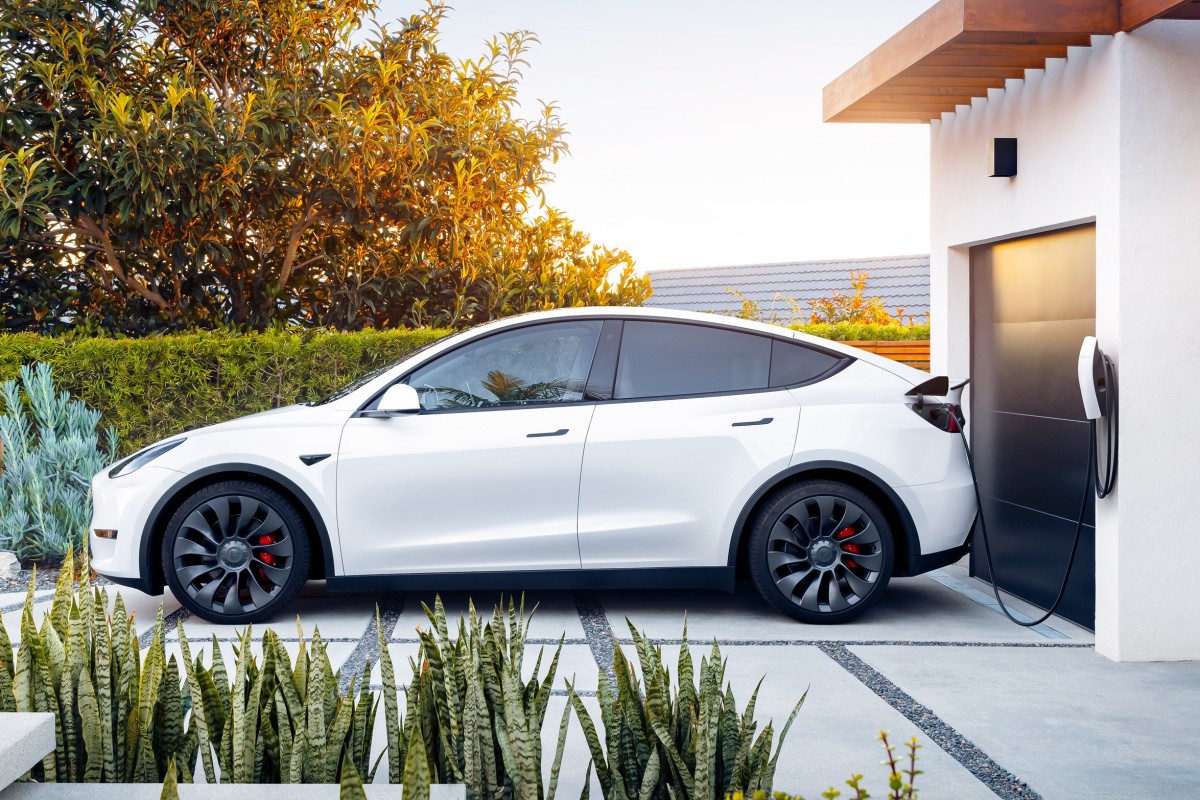
Tesla
In case you don’t know, TÜV is Germany’s independent vehicle inspection authority – the people who do the state-mandated safety checks on every car – so their defect numbers of the more than 9.5 million cars tested are as real as it gets. Think of TÜV as a mix between your state vehicle inspection stations and an ultra-strict version of Consumer Reports’ test lab, all rolled into one and backed by law.
That TUV-tested age band we are talking about is where cars are basically still new. Across all brands, only about 6.5 % of cars that young fail their first check for major faults. The Mazda2? Just 2.9 %. The facts show that the 3 worst cars to buy (data only available in German) were the Tesla Model 3 (13.1%), Ford Mondeo (14.3%), and the Tesla Model Y (17.3%). The Tesla Model Y is running at almost three times the average, and more than five times the little Mazda’s rate, according to German coverage of the report.
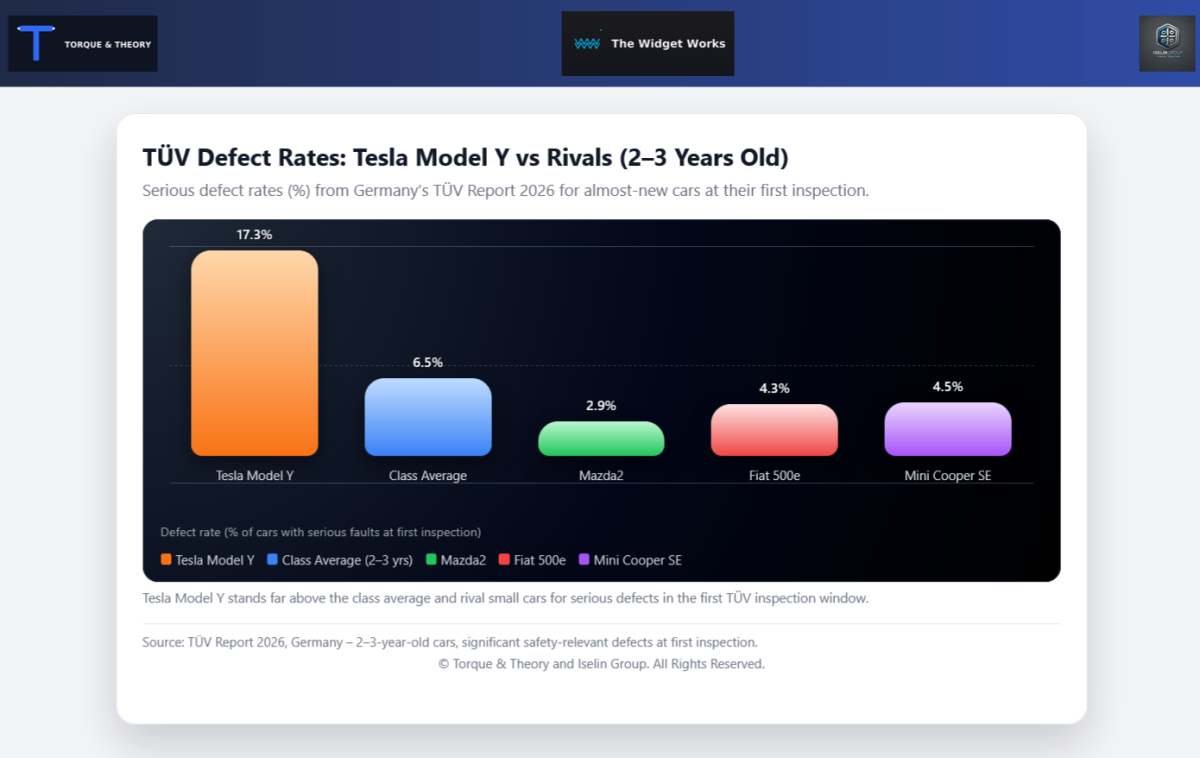
Figure 1: This chart shows how often almost-new cars fail their first TÜV inspection. The Tesla Model Y tower of orange is the worst by far; the others are what “normal” looks like.
Germany's TÜV Report Delivers Brutal News for Tesla Owners
For the latest report, inspectors looked at around 9.5 million cars and counted only serious faults: brakes, suspension, lighting, structural problems. If you fail, you do not just get a warning; the car needs fixing before it goes back on the road, as outlined in the official summary. These are only serious, often life-endangering, faults.
Breaking down the data, the TÜV Hauptuntersuchung (the inspection type that the report is based on) is about roadworthiness, not how smart the computers are:
- They check brakes, suspension, steering, lighting, tires, body, emissions, leaks, rust, seatbelts, airbags, etc.
- On newer cars they’ll also check the on-board diagnostics (OBD) system and warning lights: if there’s an ABS, airbag or general fault light on, that’s a fail until it’s fixed.
- They do not “test” FSD or Autopilot behavior – no judging lane changes, turning logic, phantom braking, any of that.
In that world, Tesla sets a record nobody wants. The Model Y has the highest defect rate of any two- to three-year-old car TÜV has seen in a decade. The Model 3 is not far behind at 13.1 %. Meanwhile, cars like the Fiat 500e, Mini Cooper SE, VW T-Roc and Mercedes B-Class sit at the tidy end of the chart, with defect rates around 3-4 %.
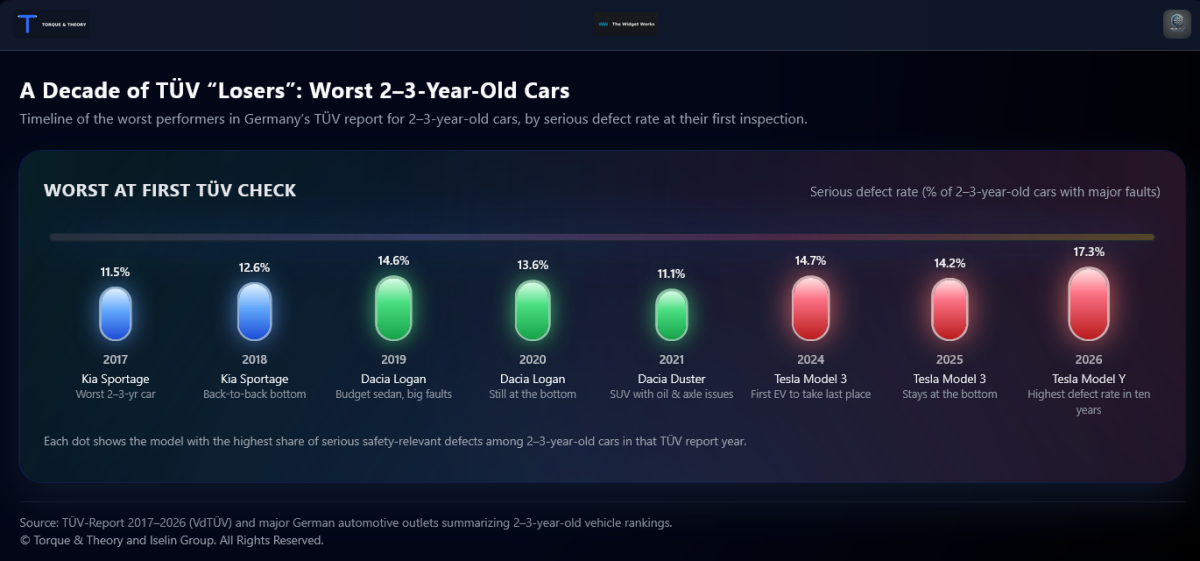
Figure 2: This timeline marks the worst car for defects in each TÜV report year. The line ends with the Tesla Model Y, which earns the highest “worst of the year” defect rate in a decade.
Brakes, Suspension, Lights: Where the Model Y Falls Apart
Here is the important part for you as a buyer: this is not about batteries or motors blowing up. TÜV and TÜV SÜD’s EV briefing both point at the same weak spots on the Model Y and Model 3. Axle suspension parts wear out early. Brake discs are worn or corroded. Lights are mis-aimed or faulty. These are basic safety items.
Yes, these Teslas pile on miles. TÜV notes that both models average well over 50,000 kilometers in just two to three years, which means a lot of highway time for a heavy electric SUV with strong regen instead of traditional fuel economy concerns. But plenty of hard-working crossovers rack up miles and do not hit a 17.3-% failure rate.
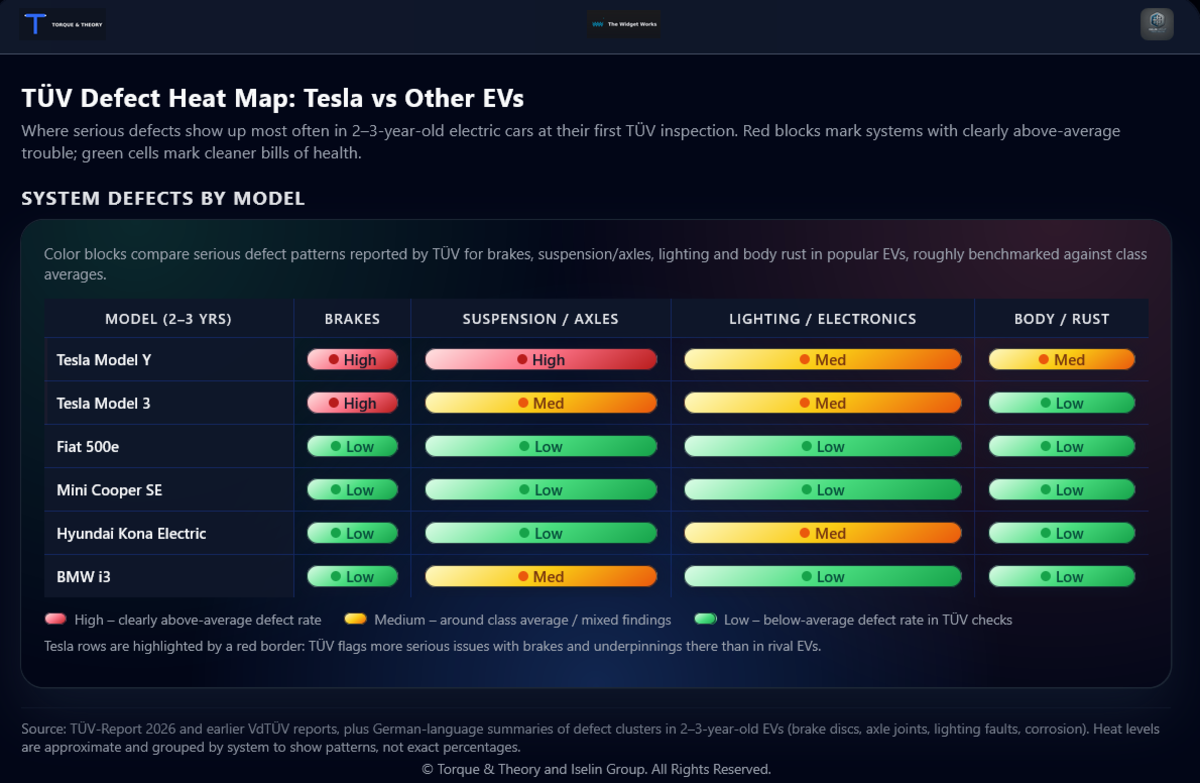
Figure 3: This table shows where each EV has trouble: brakes, suspension, lights, or body. The red boxes on the Tesla rows mean more serious problems, while the green boxes on rivals mean fewer headaches.
How the Model Y Compares to Other EVs
EV sales are booming, and when people shop for an electric SUV, they care about range, performance and tech. You look at how hard it pulls next to a turbocharged compact, how the handling feels, how good the ride comfort is on broken pavement. Reliability often ends up as a line on a spec sheet.
The TÜV data drags it to the front of the stage. One in six almost-new Model Ys in this massive sample fails a serious safety inspection. At the same time, independent write-ups make it clear that most battery-electric cars perform just as well as gas cars. The stand-out problem is Tesla Model Y reliability, not electric vehicles as a whole.
The Bottom Line for Your Wallet and Safety
If you are about to write a big check, treat this like a flashing warning light on the dash. The Model Y still gives you speed and space, but the best data we have says it also gives you the worst early-life failure rate of any new car in Germany in ten years. Especially if brakes, suspension, and axles matter to you.
You deserve something that thrills you on a back road and survives its first inspection without drama. Right now, that likely means looking past the Y - and the 3 - and toward rivals that actually stay tight and solid as they age.
from Autoblog News https://ift.tt/tNqpuZV




0 Comments