The Camry Wagon: A Brief History
Zoomers and younger millennials will probably be surprised at the fact that the Toyota Camry was once offered as a station wagon. The first generation offered a liftback option halfway between a sedan and a wagon, but the real long-roof version came in the second generation.
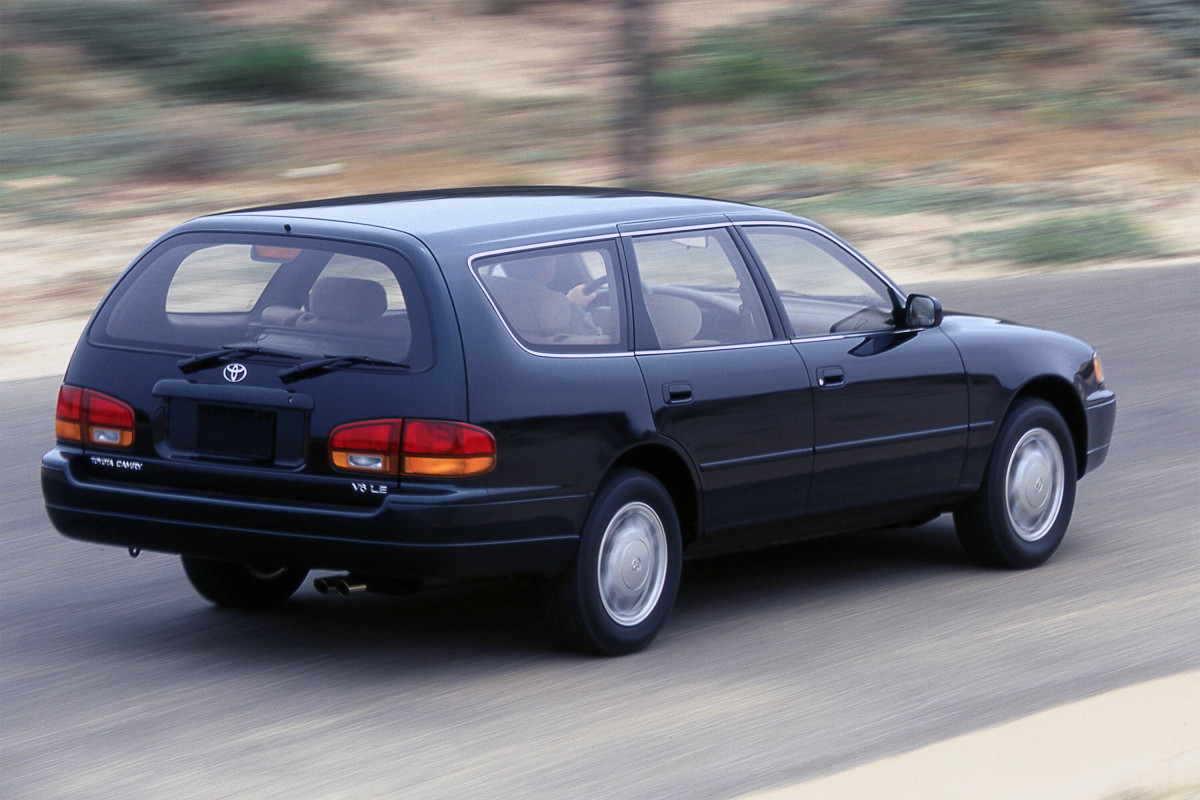
The first Camry wagon could probably rival Volvo for sheer boxiness. That said, it had a rather interesting taillight design, showing everyone that it wasn't just the sedan with more metal at the back. But the one that sticks in mind was the one that came after that. Based on the larger, more rounded third-generation Camry, it looked like a proper load lugger, and it even came with those quirky dual rear windshield wipers.
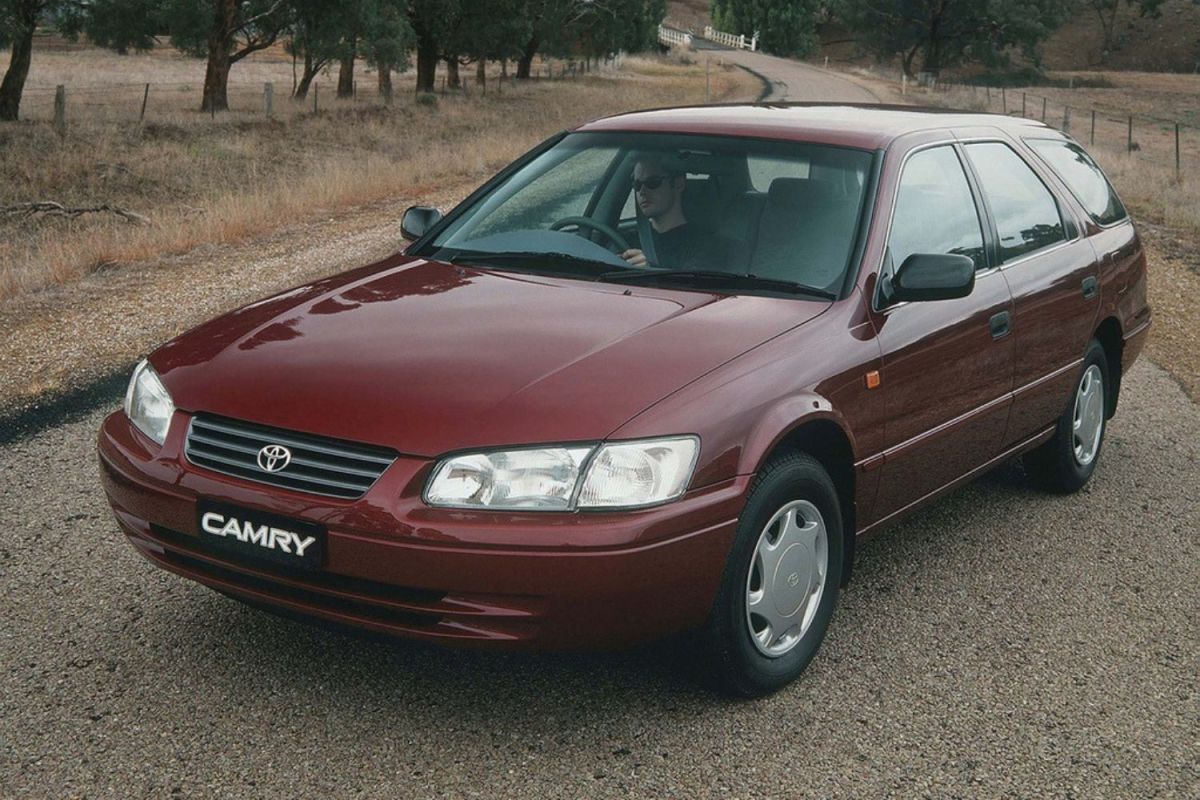
It would be the last Camry wagon sold in the US, but it lived for another generation in Asia and Oceania. Yes, the fourth-gen Camry also came in wagon form from 1996 to 2002.
Toyota
The Camry Wagon America Never Got
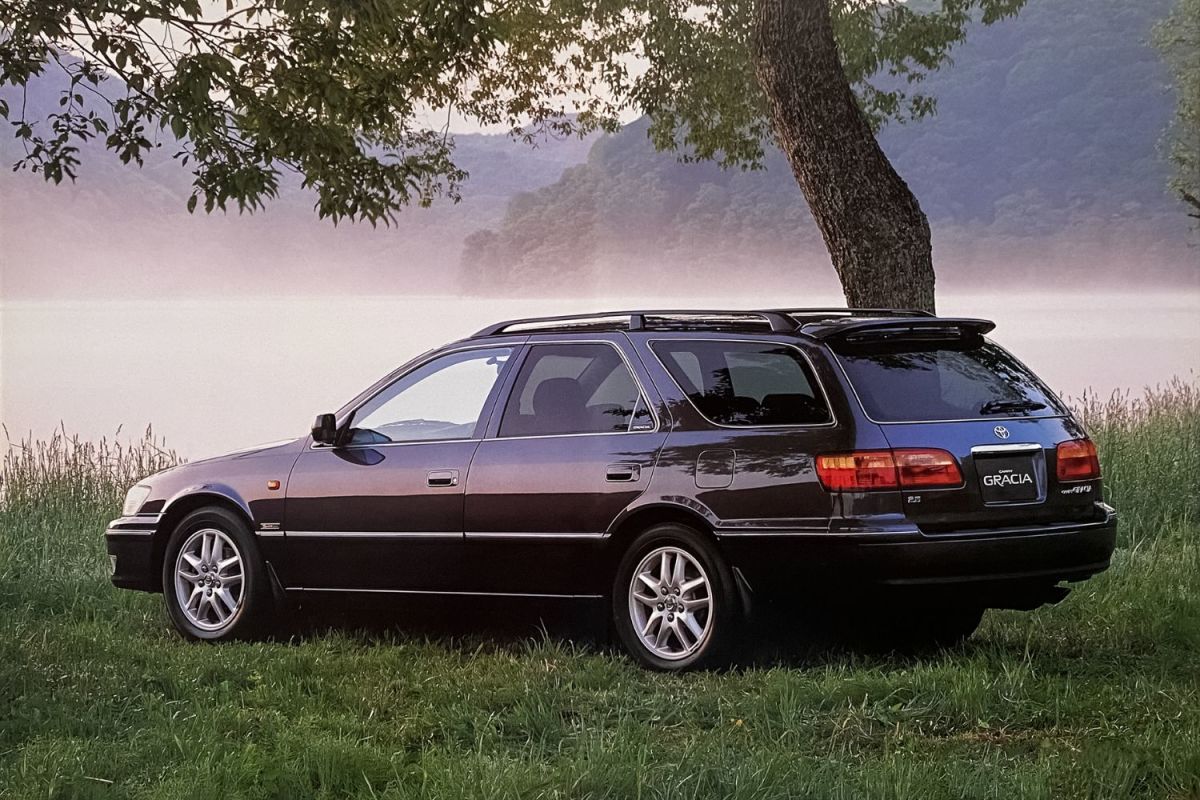
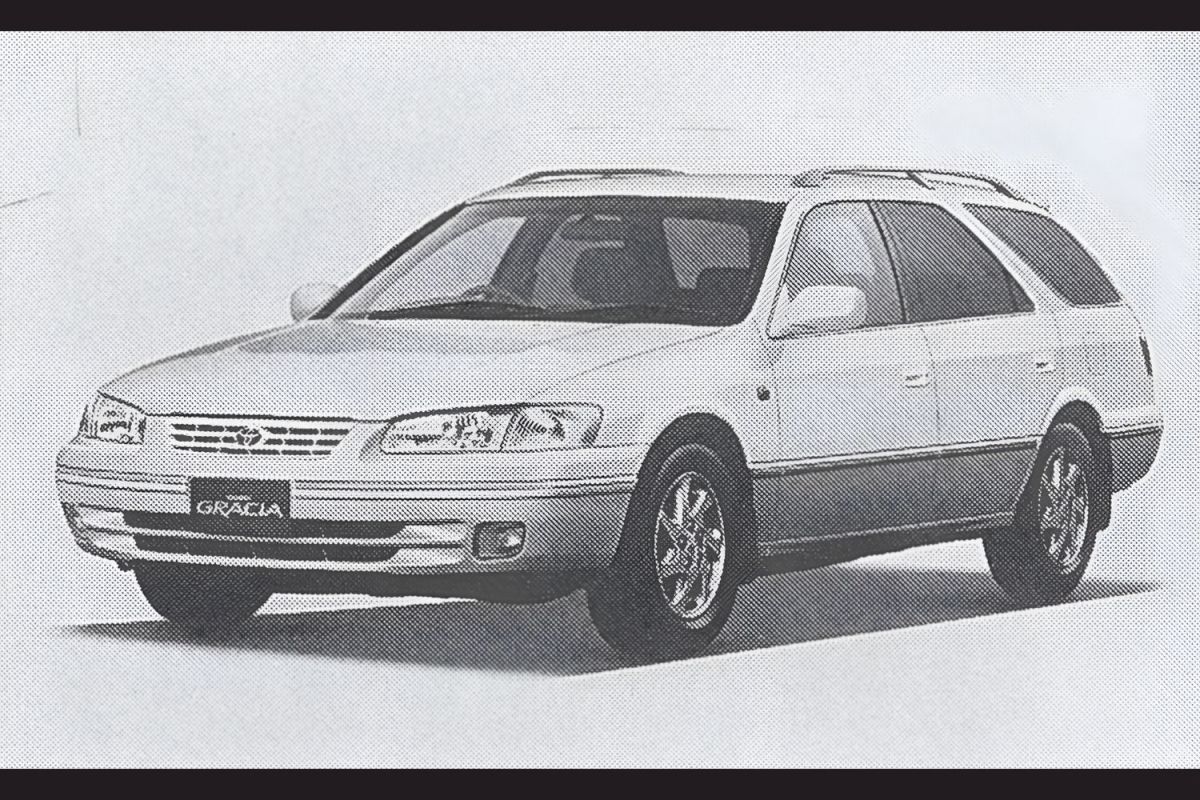
Okay, it's probably not news to those who live in Japan, Australia, or the Middle East. Still, we believe it's worth a mention as it's an interesting footnote in the Camry's history. The fourth generation of the evergreen midsize sedan was called the Camry Gracia in Japan, as there were two versions of Camry in its home market. There was one in narrow-body form to comply with vehicle size tax brackets, and the one the rest of the world got was the wider Gracia version.
The Camry Gracia Station Wagon looked the same as the sedan we all know, right until the rear doors. At the back, Toyota described it as having "Flowing pillar lines and the emphatic surface curvature of the rounded rear-end unify the wagon's free and casual motional form." In other words, the company would like to point out that they made an effort to make it look distinct from the sedan and not as an afterthought.
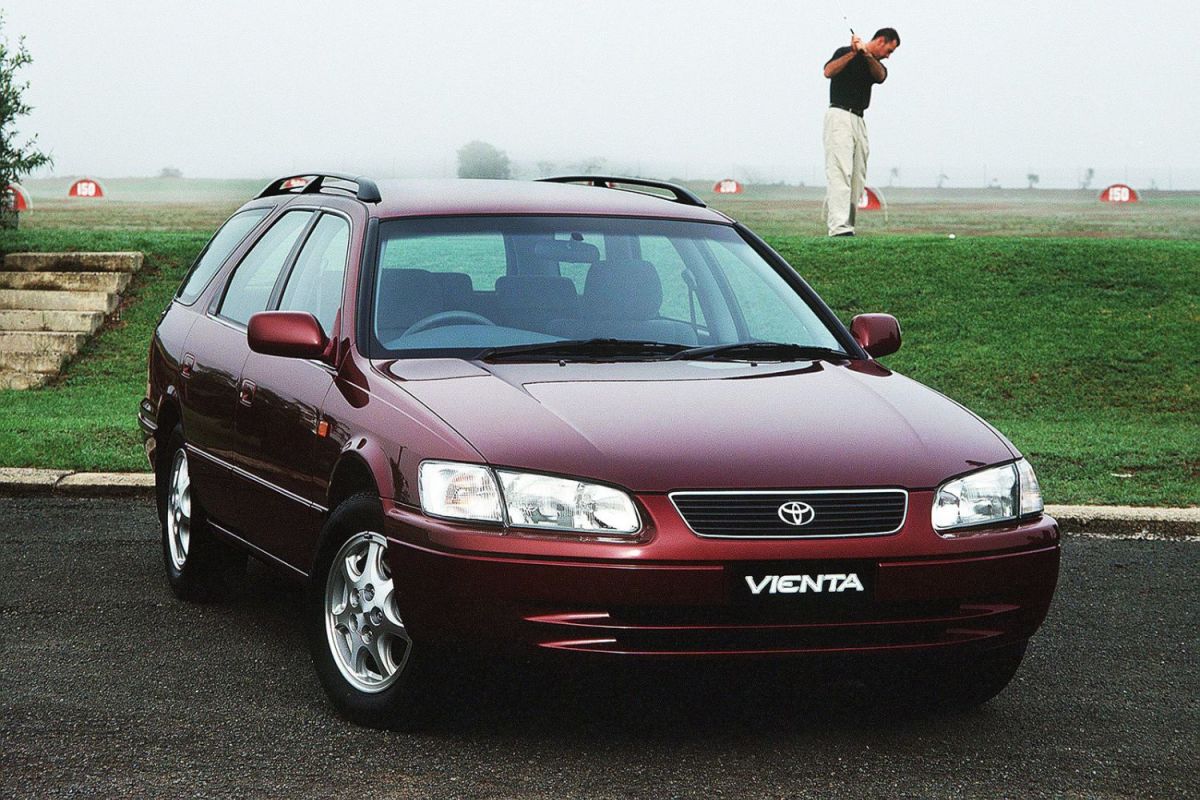
Eventually, that model made its way to Oceania for Australia and New Zealand. After that, it was the Middle East that got its meaning; these were made in left-hand drive as well. We reckon those are harder to find these days since, as far as we can tell, only that market gets left-hand drive Camry wagons of that era.
Toyota
What Did it Have to Offer?
It was pretty much identical to the sedan, if we're being honest. Most exterior panels were the same, the dashboard and door trims could be easily swapped with their sedan counterparts, and the same could be said about the oily bits.
Base Camry wagons got the 2.2-liter four-cylinder with 138 hp and 141 lb-ft. Japanese versions were available with a 2.5-liter V6 that bumped up power to 197 hp and 180 lb-ft. For Oceania and the Middle East, the 3.0-liter V6 was the top option, although it actually made a little less horsepower than the 2.5-liter. It made more torque, though, and made 194 hp and 209 lb-ft.
We can't talk about wagons without mentioning cargo space. Based on Australian specifications, the Camry wagon had 24.4 cu. ft. of room back there, nearly doubling the sedan's 14.1 cu. ft rating. Mind you, those were VDA measurements, meaning it's only measured until the highest point of the back seats.
Toyota
The Last Camry Wagon
Despite its practical proposition, the final generation of Camry wagon didn't exactly sell in great numbers. For starters, it was sold in limited markets, but even then, it had to contend with competition from there. Australians and New Zealanders had Ford Falcon and Holden Commodore wagons, which offered even more space. And while the Middle East loves the Camry, the wagon version didn't sell well. In Japan, the Camry Gracia was positioned as a premium product and, as a result, was on the pricier side of Toyota's lineup there.
But it was the initial rise of SUVs and crossovers, along with the success of the RAV4, that sealed the Camry wagon's fate. The fifth-gen Camry would be a sedan-only model, and models like the first-generation Highlander would deem the wagon redundant. Today, the Camry wagon is a curiosity in countries that never got them, but the consolation is that there are folks out there willing to preserve them instead of being a forgotten part of Toyota's long history.
Toyota
from Autoblog News https://ift.tt/Mh3b7Dn




0 Comments