On May 28, 2026, sixteen days before the green flag drops on the 94th running of the 24 Hours of Le Mans, a new museum will open its doors at the main entrance to the Circuit de la Sarthe. It is called M24, the Museum of Motorsport, and it represents the most ambitious attempt ever made to tell the story of racing under one roof. Not just endurance racing. Not just Le Mans. All of it. The museum sits at 9 Place Luigi Chinetti in Le Mans, an address that carries weight for anyone who knows the sport's history. Luigi Chinetti was the Italian-American driver and Ferrari dealer who won Le Mans three times and single-handedly convinced Enzo Ferrari to enter the race. That his name marks the ground where this museum stands is not an accident.
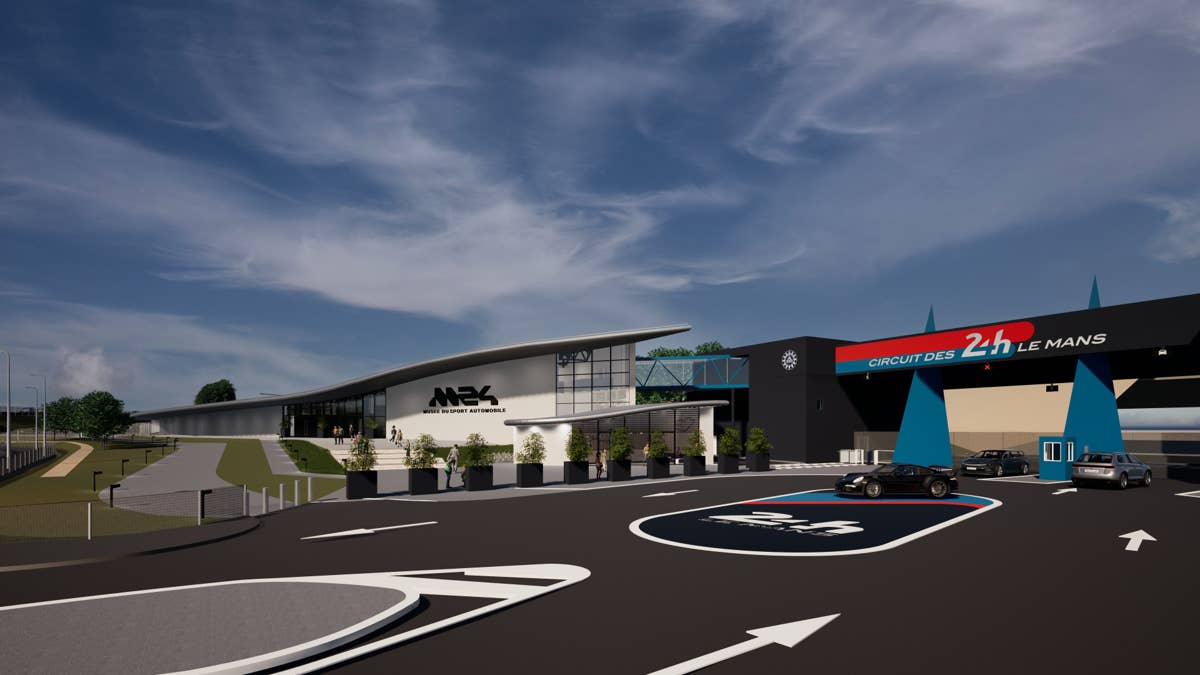
What it is
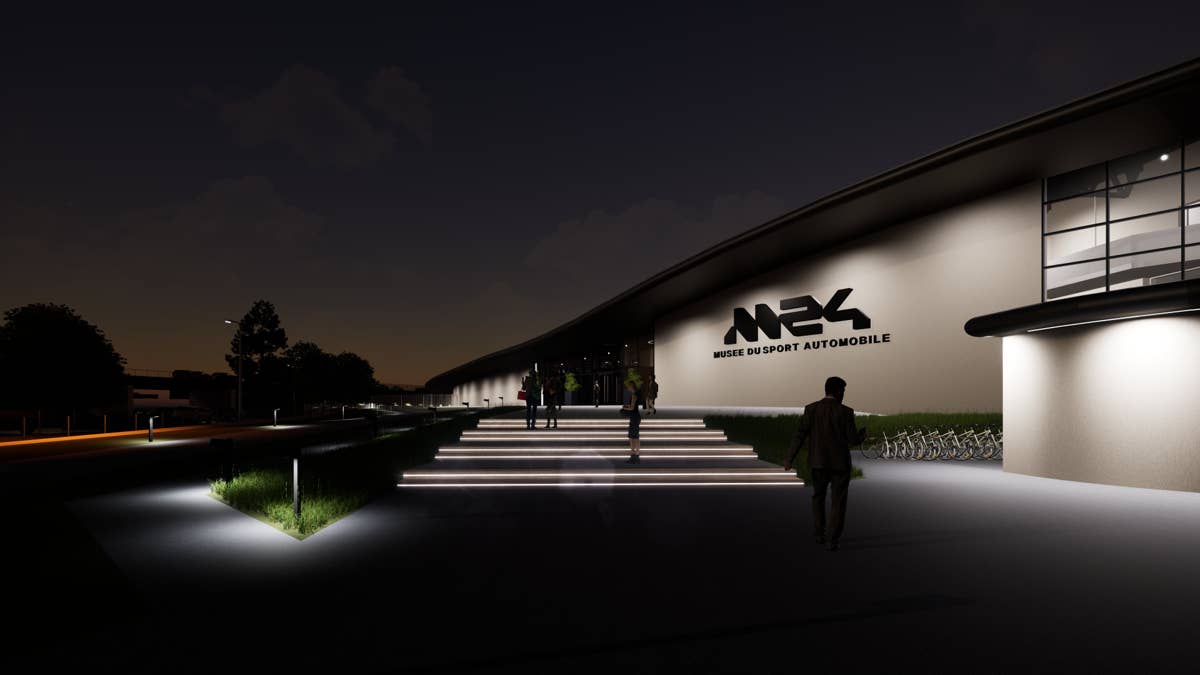
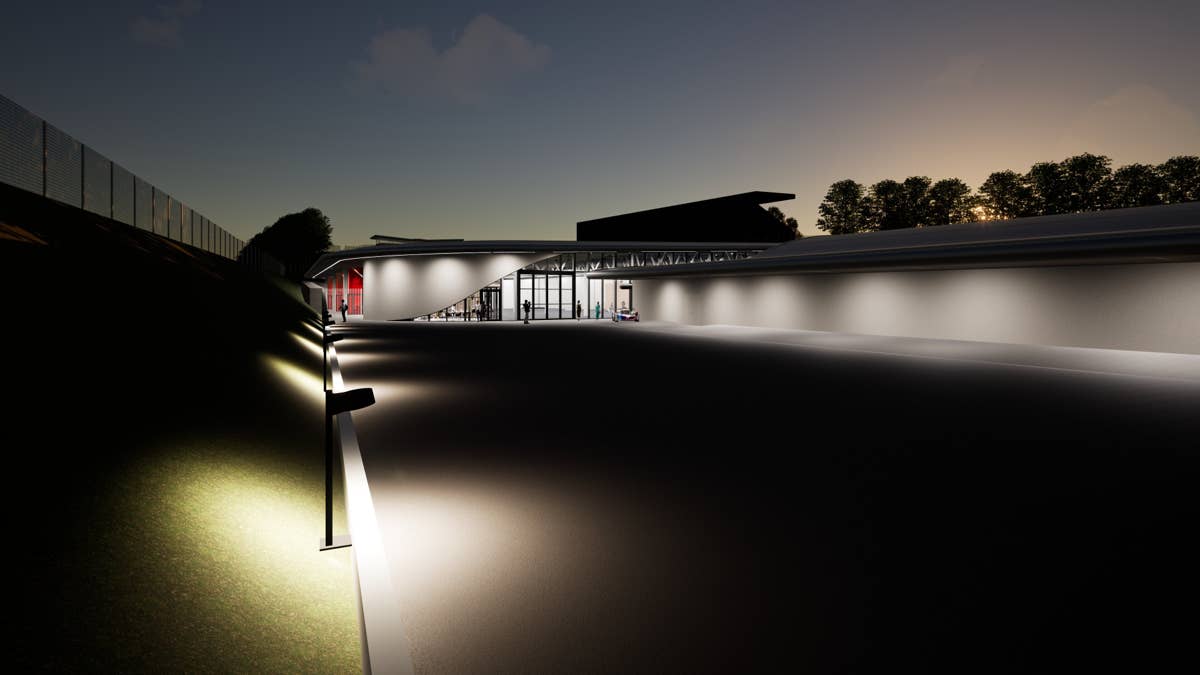
M24 is the result of a four-year collaboration between the Automobile Club de l'Ouest and the Swiss luxury watchmaker Richard Mille, formalized in 2022 through a joint venture called MACO. The project transforms the former 24 Hours of Le Mans Museum, which first opened in 1961, was renovated in 1991, and came under ACO management in 2017, into something fundamentally different. The original building has been entirely restored and expanded with a new wing designed by architect Frédéric Audevard, bringing the total exhibition area to 8,600 square meters.
Where the old museum told the story of Le Mans and only Le Mans, M24 uses the race as a doorway into the wider world of motorsport. The exhibition spans Formula One, IndyCar, rallying, Can-Am, motorcycling, and the engineering, rivalries, and people that connect them. The narrative is structured not as a chronological timeline but as a theatrical reconstruction of a Le Mans race weekend, with visitors moving through themed areas titled Scrutineering, The Start, The Night, and The Victory before the exhibition opens into the broader disciplines. The immersive design was created by Raphaël Daguet and his scenography firm The Immersers, who describe their approach as narrative rather than curatorial: telling stories rather than displaying objects.
The collection
The cars are why you go. And these cars are extraordinary. M24 houses over 100 vehicles across multiple disciplines, all kept in running order, with an on-site restoration workshop incorporated directly into the visitor experience. The oldest piece is the 1924 Bentley 3 Liter, the earliest surviving Le Mans winner, fresh from a 3,700-hour restoration. From there, the collection arcs through decades of competition: the Porsche 917 LH, the longtail prototype that dominated Le Mans in the early 1970s. The Mazda 787B, the only rotary-engined car to win the 24 Hours and the reason an entire generation of enthusiasts fell in love with a triangle-shaped combustion chamber. The Toyota TS050, the car that finally ended Toyota's decades of Le Mans heartbreak. Michael Schumacher's Ferrari F2002 was the machine that carried him to five consecutive championships. A Lancia Stratos in full Alitalia livery, arguably the most beautiful rally car ever built.
A Ferrari 166 MM and Ford GT40 are currently in the workshop, visible to visitors as part of the restoration process. Many of the cars come from Richard Mille's personal collection. "I've been excited about beautiful cars ever since I was a small boy," he said during the project's unveiling at the Rétromobile show. "Today, they deserve to be shared with the greatest number of enthusiasts."
The people
M24 does not just celebrate machinery. "Champions Alley" pays tribute to 35 figures from across motorsport history, including Ayrton Senna, Michael Schumacher, Jacky Ickx, Tom Kristensen (the nine-time Le Mans winner known as "Mr. Le Mans"), Michèle Mouton (the only woman to win a World Rally Championship round), Odette Siko (one of the first women to race at Le Mans, in 1932), and Sébastien Loeb. Senna's actual racing suit is among the artifacts on display.
There is also a detail that speaks to the museum's commitment to completeness: 4,800 scale models at 1/43 size document every car that has started the 24 Hours of Le Mans since 1923. Every single one. Over a century of competition represented in miniature, which is either a logistical marvel or a collector's fever dream depending on your perspective.
Why it matters
Motorsport museums exist. Good ones, too. The Porsche Museum in Stuttgart, the Ferrari Museum in Maranello, the Indianapolis Motor Speedway Museum, and the Petersen Automotive Museum in Los Angeles are all world-class institutions. But each of them tells the story of a single brand or a single culture. M24 is the first museum that treats motorsport as a whole, connecting Le Mans to Formula One to rally to IndyCar under one narrative, acknowledging that the sport's greatest stories have always crossed disciplines.
The timing is deliberate. M24 opens in the 120th anniversary year of the Automobile Club de l'Ouest, the organization that created the 24 Hours of Le Mans and has governed it since 1923. It also opens at a moment when the sport is evolving faster than at any point in its history: hybrid powertrains, hydrogen prototypes, electric touring cars, and manufacturer lineups that shift yearly. By anchoring the future in a deeply felt presentation of the past, M24 makes the case that understanding where racing came from is essential to caring about where it goes.
Before the ACO and Richard Mille began this project, the museum was already drawing 208,500 visitors annually. The target for M24 is 300,000 within two to three years. General admission is €20, with ACO members paying €10. Tickets are already on sale.
When do the doors open?
Richard Mille, characteristically, put it best. "M24 is a place where these stories will live on. It's where a kid can fall in love with a car and maybe decide one day to be an engineer, designer, or racing driver. If anyone comes out with their eyes sparkling a bit brighter than when they went in, then M24 will have served its purpose." Doors open May 28 at 10 a.m. The 94th 24 Hours of Le Mans begins June 13. If you are going to one, consider going to both.
from Autoblog News https://ift.tt/QaSEt3B



0 Comments