EVs and Motion Sickness
There is an odd phenomenon in EVs wherein passengers seem to suffer more from motion sickness compared to ICE-powered vehicles. Now, this isn't because of psychology, but rather, your body struggling to adapt to a quieter environment, among other things.
Because our bodies are used to the usual sounds and sensations that fuel-fed cars offered for decades, transitioning to a full EV takes away some of that. Couple that with the more immediate response of these vehicles, aggressive regenerative braking, and one-pedal driving, and we can occasionally struggle to keep up with what our eyes see and our bodies feel.
This isn't just some theory, either. There was a study performed by the Université de Technologie de Belfort-Montbéliard (shared by The Guardian) that found a correlation of fewer sensations felt in EVs leading to motion sickness. One major factor is that our brains lack "accuracy in estimating the motion forces."
Mercedes-Benz Patents a Potential Solution
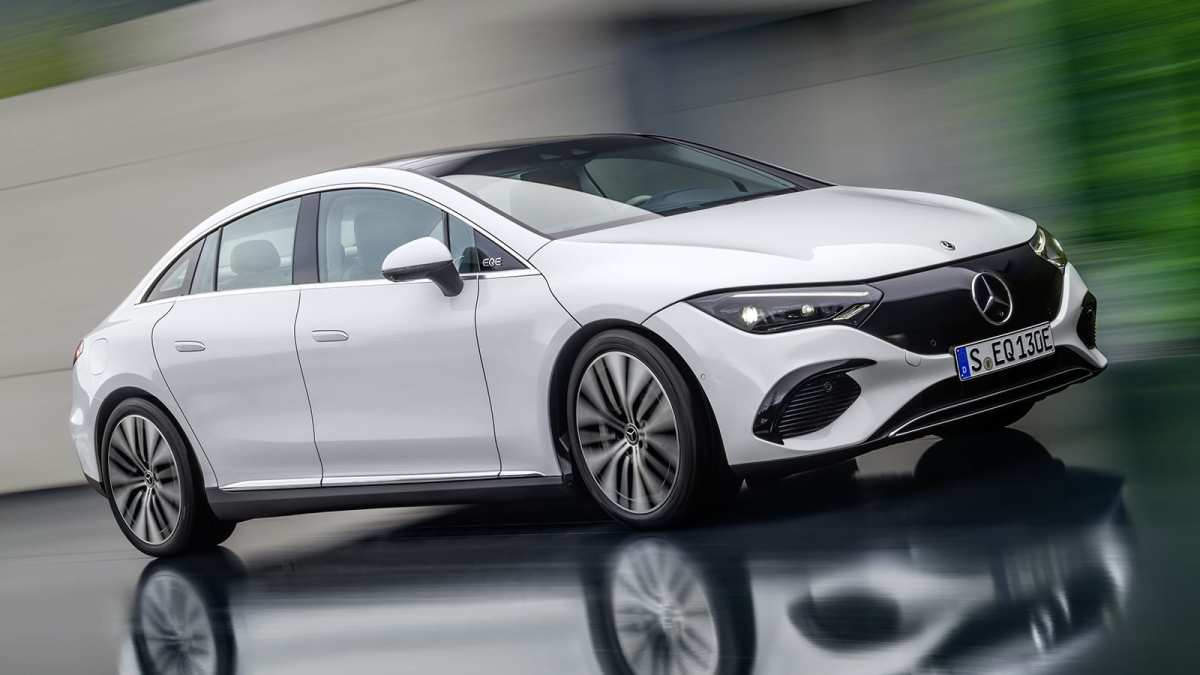
As spotted by CarBuzz, Mercedes-Benz recently patented a possible solution to combat in-car motion sickness. Mind you, the German automaker isn't the first to patent such an idea, but this is the latest one to be uncovered.
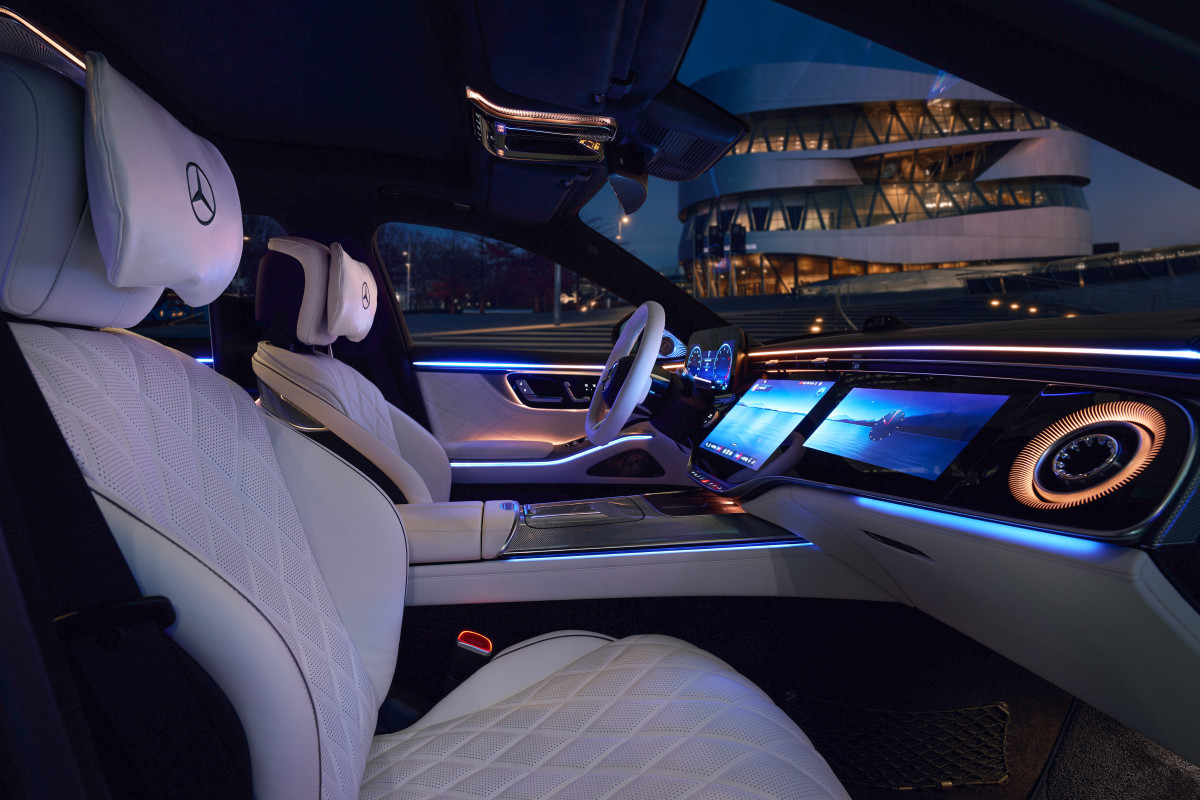
Its proposal? Simulating the sensation of movement with the use of lights and interior airflow. The patent reveals a multitude of (presumably) hidden air vents that continuously adjust the amount of air flowing into the cabin. The faster the car goes, the stronger the fans work, and vice versa.
As for the lights, they use the vehicle's ambient lighting to replicate the feeling of motion through additional visual stimulation. There are mentions of the lights changing color during acceleration or braking, as well as the use of patterns and arrows for more dynamic visual cues.
Mercedes-Benz
It Sounds...Complex
Indeed, it does. For starters, adding heaps of vents to a car doesn't sound like a particularly elegant solution. Also, adding continuously variable vents and blowers brings with it another set of programs on top of automatic climate control. Then there's the matter of maintaining the cabin temperature with the system in place. We can only imagine how many actuators would be needed to make it work.
The same goes for the lights, too. Granted, it's easier to program ambient lighting than the entire vehicle's climate control system, but it's added work, nonetheless. Either way, those lights have to be in constant communication with the car's other sensors to be truly effective.
Unlikely to Reach Production?
The thing about patents is that filing them doesn't mean we'll see them applied for real in the future. It's done to protect the idea for potential use down the line in one way or another. Given how much work is needed to make it happen, it's unlikely we'll see this anti-motion sickness system in Mercedes-Benz products in the near future.
That said, there are recommended remedies to help prevent or reduce motion sickness. For drivers, a steady foot on the accelerator is key to keeping passengers less dizzy. Reducing the level of the regenerative brakes can help as well, and for those getting to grips with one-pedal driving, it's best to practice it with no one else on board.
Mercedes-Benz
from Autoblog News https://ift.tt/TF9lVzx






0 Comments